
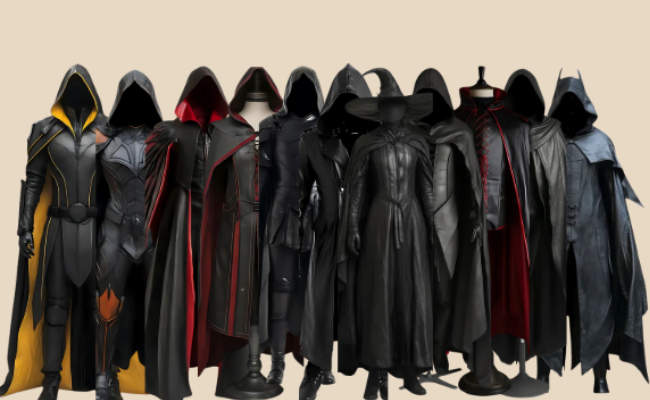

Choosing between faux leather and real leather can completely change how your cosplay looks, feels, and survives a long convention day.
A lot of cosplayers focus on color, props, wigs, and character accuracy first. Then the material decision shows up later and suddenly becomes a major problem. Should you go with faux leather because it is cheaper and easier to work with? Or should you invest in real leather because it looks better and lasts longer?
The answer is not the same for every costume.
In the faux leather vs real leather debate, the better option depends on your budget, your skill level, your character design, and how often you plan to wear the cosplay. For some builds, faux leather is clearly the smarter choice. For others, real leather gives a level of realism and durability that synthetic materials cannot fully match.
This guide breaks it all down in a practical, convention-focused way so you can choose the right material without wasting time or money.
Which Is Better for Cosplay Conventions?

If you want the short answer, here it is:
- Faux leather is better for budget-friendly cosplays, beginners, lightweight pieces, and one-time or occasional convention wear.
- Real leather is better for long-term durability, premium-looking accessories, heavy-use costumes, and builds where structure really matters.
- A mix of both is often the best choice for serious cosplay projects.
That is the real answer most experienced cosplayers come to after a few builds.
Why Material Choice Matters at a Convention
A costume that looks amazing in your room can become a nightmare on the convention floor.
Conventions put stress on materials in ways many new cosplayers do not expect. You are walking for hours, sitting, bending, sweating, carrying bags, getting photographed, and moving through crowded spaces. Some costume materials hold up beautifully. Others start sticking, creasing, cracking, or becoming uncomfortable much faster than expected.
That is why faux leather vs real leather for cosplay conventions is more than a style question. It is a performance question.
You are not just choosing how a costume looks. You are choosing how it behaves in real-world use.
What Is Faux Leather?
Faux leather is a synthetic material made to imitate the look of genuine leather. It is usually made with a plastic surface such as polyurethane or PVC over a fabric backing.
For cosplay, faux leather is popular because it is:
- more affordable
- easier to find in fabric stores and online
- available in many colors and finishes
- often easier to sew than thick real leather
- suitable for vegan or animal-free costumes
You will commonly see faux leather used for:
- anime jackets
- superhero suit panels
- boot covers
- belts and straps
- decorative armor details
- gloves and fitted costume accents
High-quality faux leather can look surprisingly good, especially in photos or from normal convention distance.
What Is Real Leather?
Real leather is made from animal hide and processed for use in clothing, accessories, armor, upholstery, and craftwork. It comes in different weights, finishes, and grades, which makes it useful for many kinds of cosplay builds.
Real leather is often used for:
- belts
- harnesses
- corset-style pieces
- holsters
- pouches
- straps
- fantasy armor components
- rugged boots and gloves
The biggest appeal of real leather is that it usually feels more authentic, wears more naturally, and holds structure better than synthetic alternatives.
Faux Leather vs Real Leather: Side-by-Side Comparison

Here is a simple comparison before we get into the details.
Faux leather
- Lower cost
- Easier for beginners
- Lighter for many costume pieces
- More color options
- Good for decorative use
- More likely to peel or crack over time
Real leather
- Higher cost
- More durable
- Better texture and realism
- Stronger for structural pieces
- Ages better with repeated wear
- Heavier and usually harder to work with
Cost: Faux Leather Is Usually the Budget Winner
For most cosplayers, price matters. Convention trips are already expensive, and materials can eat up your budget fast.
This is where faux leather usually wins.
If you are making a full costume with multiple leather-like details, faux leather can save a lot of money. That matters even more if you are still testing patterns, learning construction, or building a cosplay you may only wear once or twice.
Why faux leather is cheaper for cosplay
Faux leather is generally more affordable per yard or meter. It is also less painful to replace if you make a cutting mistake.
That makes it a strong choice for:
- first-time cosplayers
- student budgets
- group cosplays
- experimental builds
- convention costumes with many decorative panels
Why real leather costs more
Real leather is usually more expensive up front, and the total cost often goes beyond the material itself. You may also need:
- leather tools
- stronger needles
- rivets or snaps
- edge finishing supplies
- conditioning products
For a high-end build, that may be worth it. For a casual cosplay, maybe not.
Best choice for budget: faux leather
Appearance: Real Leather Usually Looks Better Up Close

If your priority is visual realism, real leather has the edge.
It has natural grain, richer texture, and a more convincing finish, especially in close-up convention photography. This matters most for cosplay styles where texture is part of the character design, such as fantasy, medieval, post-apocalyptic, or historical-inspired costumes.
When faux leather looks great
Faux leather still works very well for many cosplay styles, especially when the design is sleek, stylized, or modern. It can look excellent in:
- sci-fi costumes
- gaming cosplays
- anime outfits
- superhero builds
- glossy or polished character designs
In those cases, faux leather may not only be good enough. It may actually suit the costume better.
When real leather stands out most
Real leather usually looks strongest in:
- weathered fantasy costumes
- leather armor cosplay
- utility belts and holsters
- close-up craftsmanship judging
- detailed convention photography
Best choice for realism: real leather
Comfort: The Best Material Depends on the Build
A lot of people ask which material is more comfortable, but the truth is that comfort depends on more than the material name.
Fit, lining, thickness, breathability, and where the piece sits on the body matter just as much.
Faux leather comfort
Faux leather is often lighter, which can make it easier to wear for large costume sections. But cheaper faux leather can trap heat badly and feel sticky after a few hours in a crowded venue.
Common issues include:
- overheating
- sweat buildup
- sticking to skin
- limited breathability
- stiffness at bend points
Real leather comfort
Real leather is often heavier, but it can breathe better than low-grade synthetic material. It also tends to soften and shape itself to the wearer over time.
That makes it a strong option for items such as:
- belts
- gloves
- bracers
- fitted accessories
- structured waist pieces
The downside is that real leather can feel stiff at first and may need breaking in.
Best choice for lightweight comfort: faux leather
Best choice for broken-in long-term comfort: real leather
Durability: Real Leather Wins for Long-Term Wear

This is one of the clearest differences in the real leather vs faux leather durability discussion.
Real leather usually lasts longer.
If you attend conventions regularly, rewear costumes, compete in craftsmanship categories, or want to keep a build for years, real leather is usually the stronger investment.
Why real leather lasts longer
Real leather is generally more resistant to tearing, stress, and repeated movement. It can also age in a visually appealing way. Small scuffs often add character instead of ruining the look.
Why faux leather breaks down faster
Faux leather can hold up well in the short term, especially higher-quality versions, but it is more likely to:
- peel
- flake
- crack at folds
- wear down under friction
- suffer from poor storage conditions
This is especially common in boot covers, fitted sleeves, and heavily bent areas.
Best choice for durability: real leather
Ease of Crafting: Faux Leather Is Better for Beginners
For many people, the best material is the one they can realistically cut, sew, shape, and repair.
That is why faux leather is often the better starting point.
Why faux leather is easier to use
It is more familiar to people who already sew fabric-based costumes. Depending on the thickness, it can be easier to machine sew, glue, clip, and pattern-test than real leather.
It is a practical option for:
- beginner costume makers
- cosplay students
- quick convention deadlines
- fitted costume details
- mockups and test pieces
Why real leather is more demanding
Real leather usually requires more confidence and precision. Once you punch holes or mark it, mistakes are harder to hide. Thicker leather may also need different tools and construction methods.
It is better suited for makers who are comfortable with:
- cutting accurately
- punching holes
- riveting
- edge finishing
- building structured pieces
Best choice for beginners: faux leather
Maintenance and Storage
Cosplay materials do not just have to look good on event day. They also need to survive storage afterward.
Faux leather care
Faux leather is easy to wipe clean, which is helpful after conventions. But it is more vulnerable to long-term breakdown, especially if folded badly or stored in heat.
Once faux leather starts peeling, there is often no perfect repair.
Real leather care
Real leather needs more attention, but it usually rewards that care. With proper storage and occasional conditioning, it can last much longer and remain convention-ready for years.
Instead of peeling, it tends to soften, age, and develop character.
Best choice for easy short-term care: faux leather
Best choice for long-term maintainability: real leather
Ethics and Sustainability Considerations
For some cosplayers, the decision is not only about cost or performance. It is also about personal values.
Some people choose faux leather because they want an animal-free material. Others prefer real leather because it lasts longer and may reduce the cycle of replacing lower-quality synthetic pieces again and again.
This is a personal choice, and there is no single correct answer.
Your decision may depend on:
- vegan or cruelty-free preferences
- sustainability priorities
- product lifespan
- waste concerns
- comfort with animal-derived materials
If ethics are part of your buying decision, they should absolutely be part of your material decision too.
Best Use Cases for Faux Leather in Cosplay
Faux leather is usually the better option when you need flexibility, lower cost, and easier construction.
Faux leather works best for:
1. Budget cosplay builds
If keeping costs down is your top priority, faux leather makes more sense.
2. One-time convention outfits
For costumes made mainly for a single event, photoshoot, or short-term use, faux leather offers good visual value.
3. Sleek or stylized characters
Modern, futuristic, anime, and superhero designs often look great in faux leather.
4. Lightweight decorative pieces
For non-structural details, faux leather often gives the look you want without the weight.
Best Use Cases for Real Leather in Cosplay
Real leather is usually the better option when you need structure, authenticity, and repeat-use durability.
Real leather works best for:
1. Fantasy and medieval cosplay
It brings a natural depth and realism that is hard to fake.
2. Belts, holsters, and harnesses
These parts benefit from strength and shape retention.
3. Rewearable convention costumes
If you plan to use the same cosplay many times, real leather often pays off.
4. Competition-quality craftsmanship builds
For detailed, premium projects, real leather can elevate the final result.
The Smartest Option: Use Both
Many experienced cosplayers do not treat this as an either-or decision.
They mix materials.
This is often the best approach because different parts of a costume do different jobs.
For example:
- use real leather for belts, holsters, harnesses, and load-bearing straps
- use faux leather for jacket panels, boot covers, trim, and lightweight accents
- use real leather where stress and structure matter
- use faux leather where weight, budget, and flexibility matter more
For many costumes, this hybrid method gives the best result in the faux leather vs real leather cosplay debate.
How to Decide for Your Own Cosplay
If you are stuck, ask yourself these five questions:
1. What is my real budget?
Not your dream budget. Your real one.
2. How often will I wear this costume?
Once or twice points toward faux leather. Repeated convention use points toward real leather.
3. Is this piece structural or decorative?
Decorative pieces can often be faux leather. Structural pieces often do better in real leather.
4. How much realism do I actually need?
If the costume is highly stylized, faux leather may be more than enough.
5. Do I have the tools and skills for real leather work?
If not, faux leather may save you time, money, and frustration.
Common Mistakes to Avoid
A lot of costume problems happen because the wrong material was chosen for the wrong job.
Avoid these mistakes:
- choosing material based only on appearance
- buying the cheapest faux leather available
- using real leather for large sections without considering weight
- ignoring bend points like elbows, knees, and waistlines
- skipping a wear test before convention day
- assuming one material is automatically better for every piece
FAQ: Faux Leather vs Real Leather for Cosplay Conventions
Is faux leather good for cosplay?
Yes. Faux leather is a popular cosplay material because it is affordable, easy to find, and visually effective for many costume styles.
Is real leather better than faux leather for cosplay?
Sometimes. Real leather is better for durability, structure, and realism, but faux leather is often better for affordability, beginner use, and lightweight costume pieces.
What is the best leather material for cosplay conventions?
The best material depends on the costume piece. Faux leather is often best for decorative or budget-friendly parts, while real leather is better for belts, holsters, harnesses, and repeat-use items.
Does faux leather crack at conventions?
It can, especially if it is low quality, folded badly, or used in high-stress areas. Better-quality faux leather usually performs better, but it still tends to wear out faster than real leather.
Is real leather too heavy for cosplay?
Not always, but it can be. Small accessories often work very well in real leather. Large costume sections made from heavy leather can become tiring over a full convention day.
Can you mix faux leather and real leather in one cosplay?
Yes, and in many cases that is the smartest choice. Mixing materials lets you balance durability, realism, comfort, and cost.
Is faux leather or real leather better for beginners?
Faux leather is generally better for beginners because it is cheaper, easier to replace, and often simpler to sew or test.
Final Verdict
So, faux leather vs real leather for cosplay conventions: which is better?
For most people, faux leather is the better starting point. It is cheaper, easier to use, easier to replace, and perfectly capable of looking great at conventions.
But real leather is the stronger long-term option when durability, structure, and realistic finish matter more than price.
That means the best answer is not really faux leather or real leather on its own.
The best answer is this:
Choose the material based on the job each costume piece needs to do.
Use faux leather when you want affordability, flexibility, and easier construction. Use real leather when you need strength, shape, and long-term wear. And if you want the most practical result, use both where each one makes the most sense.
That is how the best cosplay builds usually come together.